Power to sheds, workshops, studios and outbuildings, with the sub-main sized for the distance and not just the load. That's the difference between a run that works and one that dims every time the compressor starts.
Why It Matters
Running power to a shed is not just a longer version of an indoor circuit. The distinguishing factor is length. A sub-main carrying its rated current over forty or sixty metres loses voltage along the way, and the symptom isn't a trip. It's a compressor that struggles to start, lights that dim when machinery kicks in, and equipment that runs hot for no obvious reason.
So the cable is sized for voltage drop rather than for current alone, which usually means a larger cable than the load by itself would suggest. The other decisions are about arrangement: whether the shed gets its own distribution board and local RCD protection (almost always the right answer if there is more out there than a light and a socket), how the cable is run and mechanically protected, and whether it goes underground, which brings its own depth and protection requirements.
Recent Work


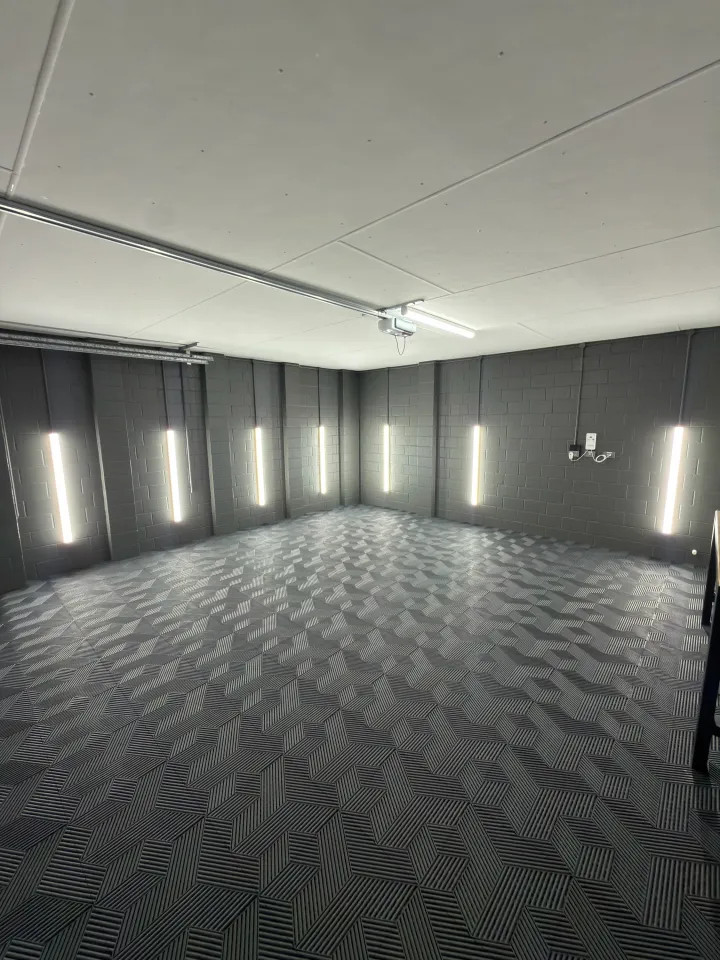
A home garage in Martin, turned into a car detailing studio: vertical LED battens so the light hits the side of the car, with black fittings and painted conduit to match the walls.
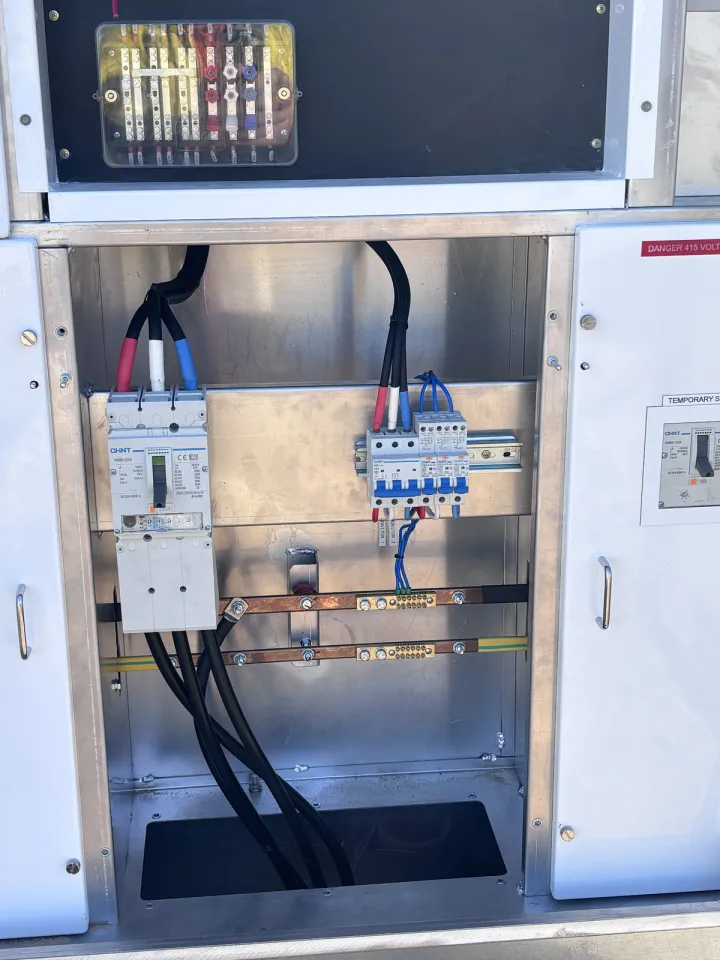
A brand-new workshop in East Rockingham, installed together with another electrical contractor. My part, as a subcontractor, was terminating the 95 mm² XLPE cables on the 200 A three-phase main switchboard.
Planning power for a new shed or workshop? Talk the job through →
What’s Included
From a single shed circuit to a three-phase workshop:
Why Dextel
Licensed Electrical Contractor EC12377 | Security Agent SA54405. $10 million public liability insurance.
Licensed since 1995, on everything from one shed light to a three-phase workshop.
Answered the same day; the site visit lands around work already scheduled.
Measured on site before it is priced. Under $1,000 there is no deposit; 20% is due on acceptance above it.
Common Questions
Usually voltage drop on the sub-main rather than a fault. The cable is carrying the load but losing too much voltage over the distance, so everything out there sees a sagging supply the moment something heavy starts. The fix is normally cable size or the way the sub-main is arranged, not anything at the appliance end.
Not as a permanent arrangement. A lead is not protected, not rated for a run of that length, and not something an electrician or an insurer will accept as the supply to a building. It is also the arrangement most likely to be sitting in water after a storm.
If there is more out there than a light and a power point, almost always. It gives you isolation at the shed itself, RCD protection local to whatever you are using, and room to add circuits later without going back to the house board every time.
Underground is tidier and out of the way of vehicles and machinery, but it costs more and has depth and mechanical protection requirements. Overhead is cheaper where the span and the clearances allow it. Where it is a genuine choice we will price both and let you decide.
Where the property already has three-phase available, yes. If it does not, that becomes a supply question for the network operator before it is an electrical one, and it is worth establishing early because it affects both cost and timing.
Same principles, and usually a longer run again. Bores are frequently the furthest thing from the house on a block, so voltage drop matters more there than anywhere else on the property.
Where We Work
Dextel is based in Spearwood and works across Perth metro. Where we work →
Most service work needs nothing up front: jobs under $1,000 carry no deposit, and quoted work above that takes a 20% deposit on acceptance, as set out in our terms →
Tell me what you want running out there and I will work out what the supply needs to be. Expect a reply before the day is out.