Perth winters bring storms. Perth storms bring lightning. Lightning near power infrastructure sends voltage spikes down the network that arrive at your house in milliseconds, and everything plugged in at that moment is at risk.
A fridge. A television. A computer. A smart home hub. An air conditioner control board. Modern appliances contain sensitive electronics that are not built to absorb a voltage spike. One significant surge event can destroy several appliances at once, often without any visible sign of damage until you try to turn them on the next morning.
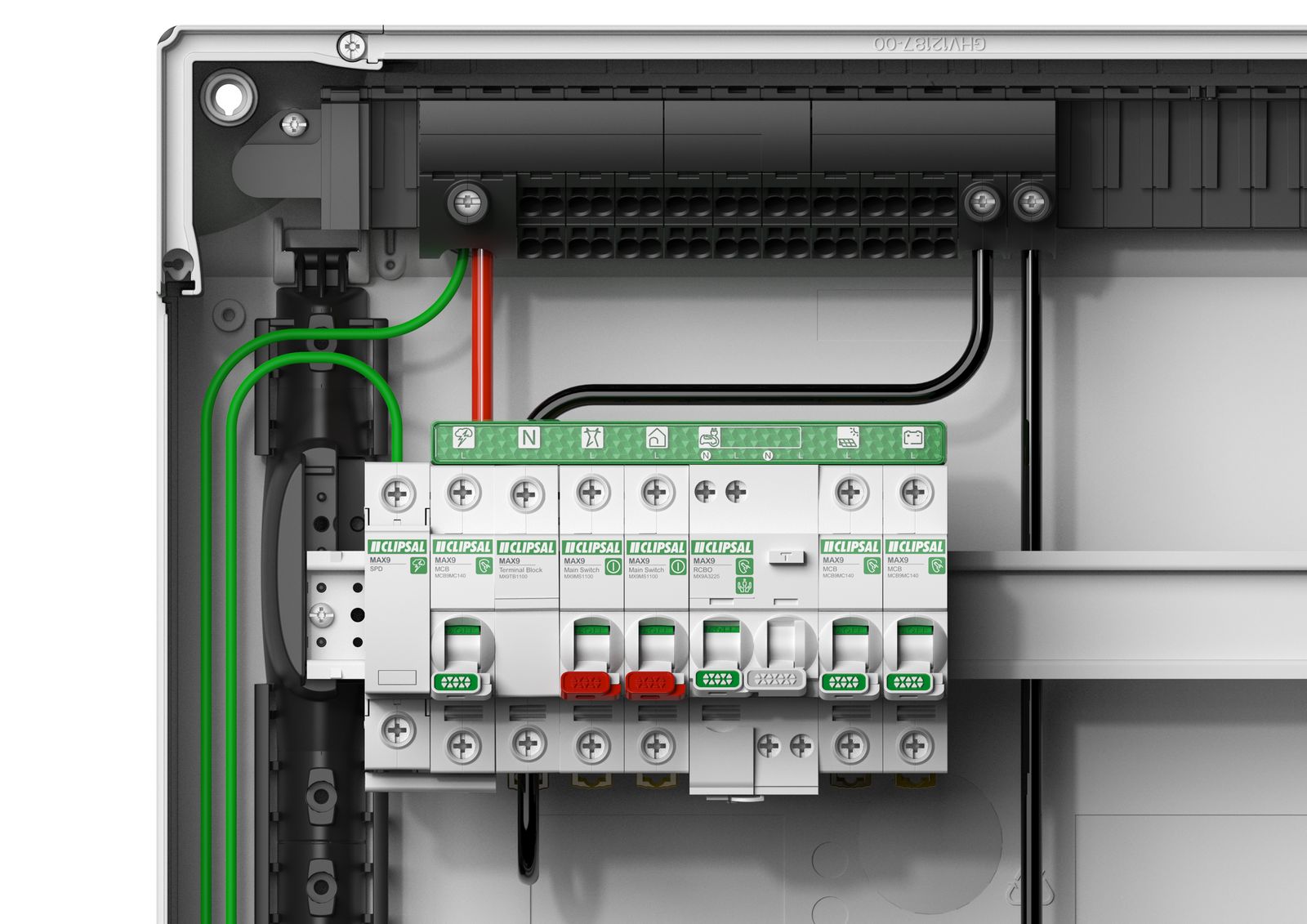
A whole-home surge protective device (SPD) installed at your switchboard intercepts that energy before it reaches a single circuit in your house. It costs under $500 installed. It takes around two hours to fit. And it protects every appliance in the home simultaneously without requiring anything from you.
What Actually Happens During a Surge
A power surge is a brief spike in voltage above the normal 240V supply. Surges vary enormously in their intensity and origin:
Lightning-induced surges are the most dramatic. A direct strike to nearby overhead power lines or infrastructure creates an enormous voltage transient that travels through the network. It does not need to be a direct hit on your house. A strike on a transformer or pole several streets away can send a damaging surge through the local network.
Utility switching surges occur when the network switches loads: restoring power after an outage, switching large industrial loads on or off, or fault clearance events. These are less dramatic than lightning but more frequent, and they happen whether or not there is a storm.
Internal surges are generated inside your own home by large appliances switching on and off. Air conditioners, pool pumps, washing machines, and refrigerator compressors all create small voltage spikes every time their motors start. These are low-level individually but accumulate over time and degrade sensitive electronics gradually.
The electronics in modern appliances (variable speed motors, inverter compressors, control boards) are built to tight voltage tolerances. A surge that would barely affect a 1970s electric jug can destroy a modern air conditioner control board that costs several hundred dollars to replace.
Why Power Board Surge Protectors Are Not Enough
Most Perth homes have at least one power board with surge protection built in, the kind with the little light that shows it is working. These provide some protection against minor surges and are better than nothing for individual devices.
For a significant lightning-induced surge, they are not adequate. Here is why.
A power board surge protector uses a component called a Metal Oxide Varistor (MOV) to absorb surge energy. MOVs have a limited capacity. They can only absorb a certain total amount of surge energy before they are exhausted. A significant surge event can exhaust a power board MOV in a single event, after which the board provides no protection at all, often with no visible sign that it has failed. The indicator light may still be on.
More fundamentally, a power board surge protector only protects devices plugged into that board. Your fridge, dishwasher, oven, air conditioner, and ducted heating system are all hardwired or plugged straight into wall outlets, so they have no surge protection at all unless a whole-home device is installed at the switchboard.
A switchboard SPD handles the surge energy at the point of entry, before it reaches any circuit in the house. Everything downstream is protected simultaneously, including hardwired appliances. On an older board it can be fitted as part of a switchboard upgrade.
Type 1 and Type 2: What Goes in Your Switchboard
Australian Standard AS/NZS 61643 classifies SPDs by their position in the installation and the surge energy they are designed to handle.
Type 1 SPDs are installed at the main switchboard on the supply side. They are designed to handle very high energy surges including those from direct or near-direct lightning strikes. They are the first line of defence and handle the largest surge events. Type 1 devices are specified for properties with overhead power supply (where the connection from the street pole to the house is an overhead cable rather than underground), because these installations have greater exposure to lightning-induced surges.
Type 2 SPDs are the most common devices installed in Australian residential switchboards. They protect against induced surges and residual energy: the surges that arrive through the network from lightning events elsewhere, and utility switching events. Most Perth suburban homes are on underground supply, making a Type 2 device appropriate as the primary switchboard protection.
Combined Type 1+2 devices offer both levels of protection in a single unit and are increasingly popular for residential installations where maximum protection is wanted without needing to specify which type of supply the property has.
Selecting the right device for a specific property involves checking the supply type, the switchboard configuration, and the earthing system. This is part of what we assess before recommending and installing a device. If your switchboard is older or lacks modern RCD protection, it is worth reading our old fuse box guide alongside this one, since both are often addressed in the same visit.
What About Perth Specifically
Perth experiences a lot of storm activity in winter. June to August brings cold fronts, thunder and lightning, and the kind of rapid weather changes that stress power infrastructure. Western Australia also has extensive areas served by overhead power lines, particularly in the older suburbs of Fremantle, Spearwood, Cockburn, and surrounding areas where the infrastructure has not been undergrounded.
Overhead supply means greater lightning exposure. A strike to a pole or transformer on your street can send a surge directly into homes on that circuit. For properties on overhead supply, whole-home surge protection is not a nice-to-have. It is important protection, given what it would cost to replace everything at stake.
Even on underground supply, network switching events and internal surges still occur. The cumulative effect of frequent minor surges on modern appliance electronics is real. It shortens component life even when it does not cause immediate failure.
What Is Actually Protected
A whole-home SPD installed at the switchboard protects every circuit in the house simultaneously:
- Refrigerator and freezer
- Television, home theatre systems
- Computers, routers, network equipment
- Air conditioning and ducted heating: the control boards in inverter systems are especially vulnerable
- Smart home devices and hubs
- Dishwasher, washing machine, dryer
- Security system and CCTV
- EV charger
- Pool and spa equipment
- Any other hardwired or plugged-in appliance in the house
Add up the replacement cost of those items and the $500 installed cost of whole-home surge protection looks very different.
What Installation Involves
An SPD is a DIN-rail mounted device that clips into the switchboard alongside existing circuit breakers and RCDs. Installation involves opening the switchboard, fitting the device, making the appropriate connections, and testing. For a standard residential switchboard the job takes around two hours.
As with all switchboard work, installation must be carried out by a licensed electrician. The device itself connects to the incoming supply and the main earthing terminal. It is not work for an unlicensed person, regardless of the product instructions.
The SPD requires a back-up fuse or circuit breaker specified by the manufacturer, which we include in the installation. Once fitted, the device needs next to no maintenance. It does its job silently and requires no ongoing attention other than a visual check that the status indicator shows it is functioning.
One Thing to Know About SPD Lifespan
Like the MOV in a power board, the components in a switchboard SPD have a finite surge-absorbing capacity. A device that has handled several significant surge events over the years may eventually reach the end of its effective life. Quality devices include a status indicator, usually a window or LED, that changes colour when the device needs replacement.
Checking the indicator during your annual switchboard inspection is the only ongoing task. We include this in any switchboard check we carry out, and we can replace an exhausted SPD during the same visit if needed.
If you would like whole-home surge protection installed or want to discuss whether your current switchboard is suitable, give us a call. Installation is straightforward, the protection is immediate, and at under $500 it is one of the better value electrical upgrades available for a Perth home. See our full electrical services for everything else we cover.
Need Help With This?
Dextel Electrical & Security Services serves Perth metro. Free quotes, no obligation.
Get a Free Quote →