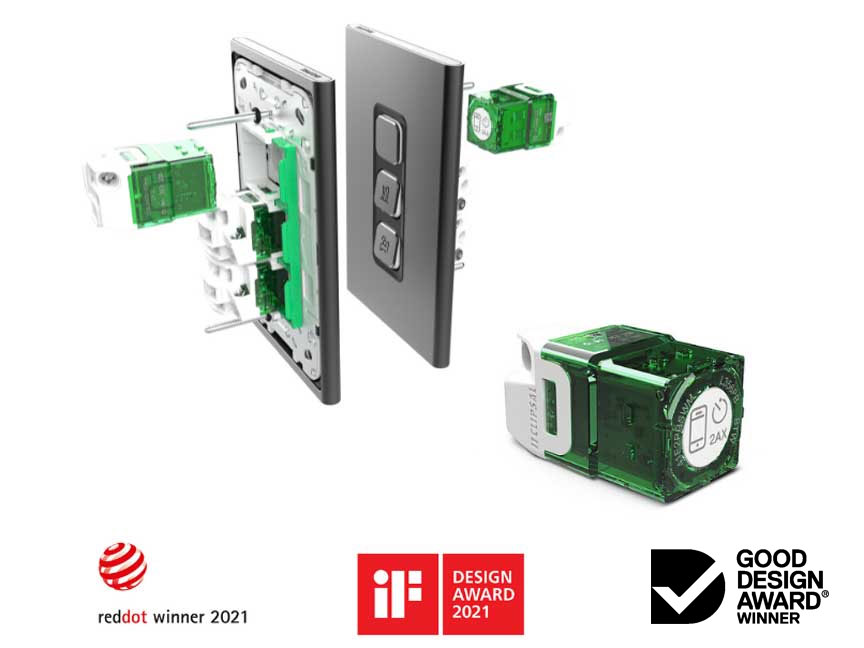
You do not need a new house to have a smart home. The lights you already have, on the same Clipsal switches that have been on your walls for 20 years, can be made smart without replacing a single fitting or pulling new cable.
What changes is what sits behind the switch. And there are now several good options available in Australia that suit different homes, different budgets, and different levels of technical ambition.
Why Smart Switches, Not Smart Bulbs
The first question most people ask is: why not just swap the bulbs for smart bulbs?
Smart bulbs work, but they have a fundamental problem. If anyone turns the physical wall switch off, the bulb loses power, and the app, voice control and automations can do nothing until someone turns the switch back on. In a home with multiple people or kids, this happens constantly. The wall switch becomes unusable as a normal switch.
Smart switches solve this by putting the intelligence at the switch itself. The physical switch works as normal. The smart features are extras: app control, voice control, schedules and automations all sit on top of a switch that works the way it always has. Everyone in the house uses it normally without knowing anything about the smart home system.
The Neutral Wire Problem in Older Perth Homes
Before looking at specific products, there is one thing every Perth homeowner needs to understand: the neutral wire.
Smart switches need a small amount of power to stay connected to your network even when the light is off. In modern Australian wiring, a neutral wire runs to each switch position, and that powers the switch electronics. In many Perth homes built before the 1990s, the neutral wire was not run to the switch. It went straight to the light fitting instead. The switch only had an active (live) wire running through it.
That is not a fault in your wiring, just how houses were built then. But it does affect which smart switch products will work for you. Opening the switch plate and checking whether you have a neutral wire present is the first step before choosing any product. This is something we do as part of our assessment.
Option 1: Clipsal Wiser: The Premium Australian Solution
Clipsal is the most common switch brand in Australian homes. The Wiser range is built for Clipsal's Iconic grid and cover plates, so where a home already has Iconic switches it drops straight in.
The result is a smart switch that looks exactly like your current switch. Same cover plate, same feel, same Australian design. Nobody who visits will notice anything has changed, until you ask your phone to turn the lights off.
Wiser uses Zigbee mesh networking through a central Wiser Hub, which connects to your router and bridges everything to the Wiser app, Google Home, and Amazon Alexa. Zigbee is a separate low-power radio, not Wi-Fi, which means the switches do not add congestion to your home network and maintain fast, reliable response even if your internet goes down (local control continues to work).
The Wiser range includes:
- Wiser Smart Switch: standard on/off control, 2AX and 10AX versions
- Wiser Smart Dimmer: trailing-edge LED dimming, 2–250W
- Wiser Micro Module: fits inside an existing switch backbox, works with your current switch mechanism
- Wiser Fan Controller: for ceiling fans on existing wiring
- Wiser Blind Controller: for motorised blinds and curtains
The Wiser switches require a neutral wire at the switch position. For newer Perth homes this is usually not a problem. For older homes it can mean the Wiser range is not an option without extra wiring work, which we can assess and quote separately.
Wiser is the right choice if you want an integrated, Australian-designed system that looks professional, works reliably, and is backed by Schneider Electric (Clipsal parent company). It is not the cheapest option, but it is the most polished.
Option 2: Shelly Modules: The Flexible No-Hub Option
Shelly is a Bulgarian manufacturer that has become popular with electricians and home automation enthusiasts globally for a simple reason: the devices are small, reliable, affordable, and work with almost everything.
Shelly modules are not replacement switches. They are relay modules that sit inside your existing switch backbox, behind your current switch. Your Clipsal switch plate stays exactly as it is. The Shelly module connects to your wiring and adds Wi-Fi control, leaving the physical switch fully functional.
The key product for older Perth homes is the Shelly 1L Gen3: a no-neutral version that works with only an active wire at the switch. This opens up smart control in homes where no neutral wire is present, without any rewiring. It does require a Shelly Bypass component fitted at the light fitting to prevent LED flicker, which your electrician handles at the same time.
For homes with neutral wire, the Shelly 1 Gen3 and Shelly 2PM Gen3 (two-channel) offer more flexibility and energy monitoring.
Shelly devices connect straight to your Wi-Fi, with no hub needed for basic use. They have their own app (Shelly Smart Control) and integrate natively with Home Assistant, Alexa, and Google Home. For anyone building a more advanced smart home, the Shelly local API is one of the most open and capable in the industry.
The latest Shelly 1 Gen4 supports more than one protocol, so you can choose Wi-Fi, Zigbee or Matter depending on your preference, giving you flexibility to change your approach later without replacing hardware.
Shelly is the right choice if you want maximum flexibility, do not mind a slightly more technical setup, and want to spend less per switch. It is particularly well-suited to older Perth homes where no neutral wire is available.
Option 3: Zigbee Switches: The Mesh Network Approach
Zigbee is a radio communication protocol, not a brand. Plenty of manufacturers make Zigbee smart switches, including Aqara and SONOFF, and they all share one thing: they use a low-power mesh network rather than Wi-Fi.
In a Zigbee mesh, every mains-powered Zigbee device acts as a repeater for the others. The more Zigbee devices you have, the stronger and more reliable the network becomes. This makes Zigbee a better choice than Wi-Fi for whole-home installations where you might have ten or twenty switches, because each one adds coverage rather than congestion.
Zigbee switches need a coordinator, a hub that connects the Zigbee network to your home network. This can be a dedicated Zigbee hub (like the Conbee II or Sonoff Zigbee Bridge), a Home Assistant installation with a Zigbee USB stick, or a voice assistant hub that supports Zigbee (some Amazon Echo models include a Zigbee hub built in).
For neutral wire situations: some Zigbee switches, including the Aqara Smart Wall Switch H2, support both neutral and no-neutral wiring.
Home Assistant: The Open Platform That Ties It Together
Home Assistant is free, open-source smart home software that runs on a local device in your home, typically a Raspberry Pi or a small dedicated server called a Home Assistant Green or Yellow. It is not a cloud service. It does not require an internet connection to function. Your automations run locally on your hardware.
All three options above (Clipsal Wiser, Shelly and Zigbee switches) work with Home Assistant. This is significant because it means:
- You are not locked into any one brand or ecosystem
- You can mix Shelly modules in older rooms with Clipsal Wiser in newer renovations
- Your Ajax security system, CCTV cameras, and smart switches can all be seen in one interface
- Automations can link devices, for example lights turning on when your Ajax motion sensor detects movement, for example
- If a manufacturer discontinues their app or cloud service, your system keeps working
Home Assistant has a learning curve. It is not for everyone. But for Perth homeowners who want genuine control over their smart home without ongoing subscription costs or cloud dependency, it is the most capable platform available.
What the Installation Actually Involves
All mains-wired smart switch installation in Australia must be carried out by a licensed electrician. This is not a technicality. These devices connect directly to 240V wiring, and incorrect installation creates real fire and safety risks. It is one of the many electrical services we carry out across Perth metro.
In practice, a smart switch installation involves:
- Isolating the circuit at the switchboard
- Removing the existing switch mechanism
- Identifying and confirming the wiring: active, neutral (if present) and switched load
- Installing the smart switch or module and confirming correct operation
- For Shelly no-neutral installations, fitting the bypass at the light fitting
- Pairing the device to the hub or network and confirming app control
A typical room with two or three switches takes around 45–60 minutes. A whole-house installation of ten to fifteen switches can usually be completed in a day.
Ceiling fans can be part of the same setup. If you are choosing fans as well, see DC ceiling fans for Perth homes.
Which Option Is Right for Your Perth Home?
The honest answer depends on three things: your wiring, your budget, and how much automation you actually want.
Newer home with neutral wire at switches, want a clean look: Clipsal Wiser is the natural fit. Keeps the Iconic aesthetic, Australian designed, reliable Zigbee mesh, good app.
Older home without neutral wire, want flexibility and value: Shelly 1L Gen3 modules are the practical choice. Works with your existing switch plates, no rewiring, strong Home Assistant integration.
Building a larger system and want maximum reliability: Zigbee switches with Home Assistant give you the most capable long-term platform, particularly if you plan to add sensors, automations, and other devices over time.
We are happy to assess your home, check your wiring, and recommend the right approach for your specific situation. The consultation is free and there is no obligation. See our full range of electrical services for everything else we can help with. If lighting is the goal, see how many LED downlights is enough.
Need Help With This?
Dextel Electrical & Security Services serves Perth metro. Free quotes, no obligation.
Get a Free Quote →