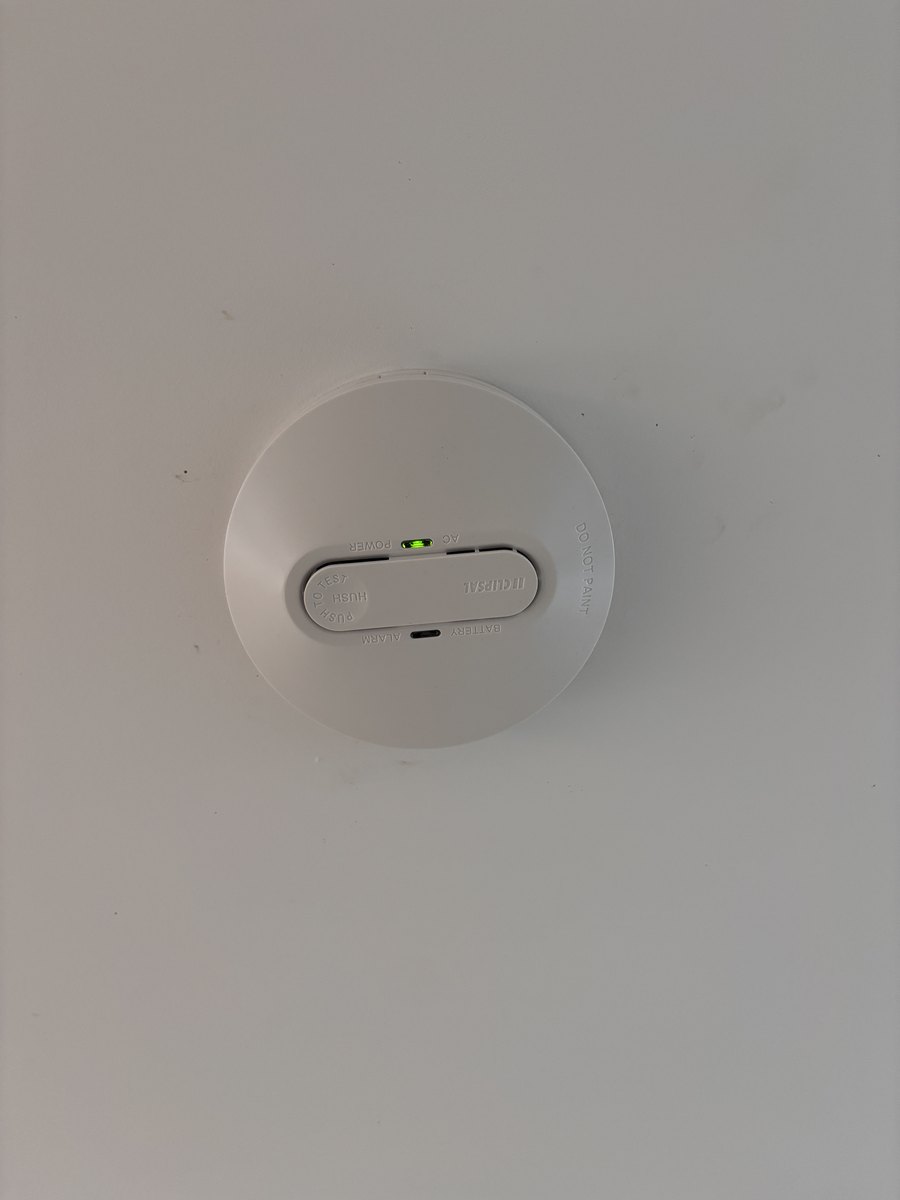
If you are selling a property in WA, or putting one up for rent, smoke alarms are one of the few things that must be sorted before settlement or before a tenant moves in. It is also an area with a lot of confidently wrong information floating around.
This is what the law actually requires, sourced from Building and Energy WA and the Department of Fire and Emergency Services.
Who is captured
The operative rule is short: dwellings must have compliant smoke alarms prior to transfer of ownership, rent and hire. It does not matter how old the house is. The transfer itself is the trigger.
For context on how this came about, mains-powered alarms became mandatory for new residential building work in WA from 1 July 1997, and the requirement was extended to existing homes at transfer of ownership, rent or hire from 1 October 2009. If you are selling or leasing today, you are captured either way.
The requirements come from the Building Act 2011 and the Building Regulations 2012, together with the Building Code of Australia and the Australian Standards it references.
What “compliant” means
Before transfer of ownership, rent or hire, the alarms must be:
- In working order
- Permanently connected to the mains power supply
- Not more than 10 years old, and not past their expiry date
- Compliant with Australian Standard AS 3786: there should be a marking on the alarm body indicating this
They must also comply with the edition of the Building Code in effect at the time they were installed.
That 10-year rule catches a lot of sellers out. An alarm that was compliant when it went in a decade ago is not compliant now, regardless of whether it still beeps when you press the button. Check the date code on the alarm body.
Why the 10-year limit exists
It is not an arbitrary number. Smoke alarm sensors degrade over time. Dust build-up, contamination of the sensing chamber and the gradual ageing of internal components all reduce sensitivity, even when the alarm still looks and sounds normal. The test button confirms the circuit and the sounder work. It does not confirm the sensing chamber still detects smoke at the sensitivity it had when new. That is why age, and not only function, is the trigger for replacement.
Most alarms have a manufacture date printed on the back. If you cannot find one, or it is older than you expected, treat that alarm as due for replacement.
If your home was built more than 10 years ago and the alarms have never been replaced, they are very likely non-compliant on age alone, even if everything else about the installation is correct. It is a common gap to find during switchboard upgrades and general electrical work, because nothing about an ageing alarm shows the problem until someone checks the date.
Photoelectric vs ionisation: the misunderstanding worth clearing up
It is widely repeated that ionisation alarms are banned in WA and only photoelectric alarms comply.
That is not correct. Building and Energy states plainly that smoke alarms complying with AS 3786 can be either photoelectric or ionisation type.
What is true is that DFES recommends photoelectric alarms, because they are better at detecting the slow, smouldering fires that modern synthetic furnishings tend to produce, and those are the fires most likely to kill people in their sleep. DFES describes ionisation alarms as most sensitive to fast-flaming fires, making them suitable for somewhere like a garage or workshop where machinery or tools may generate sparks.
So: a recommendation, not a prohibition. We fit photoelectric as standard because the recommendation is sound, but anyone telling you your existing ionisation alarms are illegal is overstating it.
Interconnection depends on the building permit date
Where more than one alarm is installed in a dwelling, they must be interconnected: when one activates, they all sound.
But interconnection is not required for a dwelling that was constructed on an application for a building permit made before 1 May 2015.
That is the distinction most commonly muddled. A 1980s house being sold in 2026 needs mains-powered, AS 3786, under-10-year-old alarms in the right positions. It does not legally need them interconnected.
DFES still recommends interconnecting them, and on most jobs the extra cost is modest since the alarms are being replaced anyway. But it is a recommendation you are choosing to follow, not a compliance requirement, and you should be told which it is.
Where they have to go
Location requirements depend on the building's Building Code classification. For a Class 1a dwelling (a detached house, row house, townhouse, terrace house or villa unit), alarms are required:
- In every corridor associated with a bedroom, or where there is no corridor, in an area between the bedrooms and the remainder of the building
- On all storeys, including storeys without bedrooms, even where that level consists only of carparking, bathrooms, laundries and the like
For Class 1b: a small boarding house, guest house or hostel accommodating no more than twelve people, or four or more single dwellings on one allotment used for short-term holiday accommodation, the same rules apply, plus an alarm in every bedroom.
Apartments and units (Class 2) and a single dwelling within a non-residential building such as a caretaker's flat (Class 4) follow location rules broadly similar to Class 1a.
Placement, and why the clearances exist
Position within the room matters as much as which rooms are covered:
- On or near the ceiling, a minimum of 300 mm from where the ceiling and wall meet
- Where ceiling mounting is not possible, wall-mounted between 300 mm and 500 mm below where the wall and ceiling meet
- On a sloping ceiling, between 500 mm and 1500 mm from the highest part
These clearances exist to keep alarms out of dead air spaces, where trapped hot air stops smoke reaching the sensor. Those spaces occur at the apex of cathedral ceilings, at the corner junction of walls and ceilings, and between exposed joists.
Beyond the clearances set out in the Building Code, individual alarms carry their own manufacturer instructions on minimum distances from light fittings, air-conditioning outlets and ceiling fans. Those instructions are part of a correct installation, so it is worth checking them for the specific alarm being fitted rather than assuming a general figure.
One related point: alarms are sensitive, and locating them close to cooking appliances or bathrooms invites nuisance alarms from burnt toast or shower steam. Where there is no better location available, a different type of alarm may be more suitable. In a private garage attached to a Class 1 dwelling the Building Code allows an alternative alarm deemed suitable by AS 1670, provided the alarms elsewhere in the dwelling comply with AS 3786.
Battery alarms: a narrow exemption, not an alternative
A battery-powered smoke alarm is permitted only where there is no hidden space in which to run the wiring for a mains-powered alarm and there is no appropriate alternative location, such as a concrete ceiling or a flat roof with no ceiling space.
Two things worth knowing:
- The exemption is per-location, not per-house. Building and Energy gives the example directly: a two-storey home may be allowed a battery alarm on the ground floor where the ceiling is concrete, but the owner must not install one on the upper floor if there is sufficient roof space to run the wiring.
- Where a property is being rented or hired and a battery alarm is permitted, it must have a 10-year life battery that cannot be removed. A replaceable-battery alarm does not satisfy that.
Local government approval is not required to use a battery alarm in that specific no-cavity circumstance, but may be required in other circumstances.
Smoke alarms and security systems: the part almost nobody explains
This is where we spend a lot of time, because the two get conflated and the distinction is a compliance issue.
Powering a smoke alarm from a security system may well not comply. Building and Energy is explicit about why:
- Smoke alarms must be permanently connected to mains power, and some home security systems can be disconnected at a power point: so the alarm is not permanently connected in the sense the law requires.
- A feed from a security system to a smoke alarm is often 12 volts, which does not satisfy the requirement for permanent connection to the 240-volt mains supply.
If your smoke detection is running off your alarm panel, there is a real chance it is not compliant for sale or lease, no matter how well it works.
Monitoring a compliant alarm through a security system is a different thing entirely, and it is fine. A properly installed mains-powered AS 3786 alarm can have its output brought into a security panel as a fire zone, so that an activation triggers a notification (a message to your phone, or a call to a monitoring service) as well as sounding locally.
That arrangement is worth having. It is the difference between an alarm that wakes the house and an alarm that also tells you the house is on fire while you are at work. But the alarm itself still has to be mains-powered and compliant in its own right. The security system adds notification; it does not replace the power supply.
If you are being quoted for smoke detection as part of a security system, that is the question to ask: is the detector mains-powered and AS 3786 compliant in its own right, or is it being fed from the panel?
Who can do the work
Only a licensed electrical contractor can connect or disconnect mains-powered smoke alarms. That includes removing an old one. We do this as a smoke alarm installation job.
You can verify anyone's licence yourself through Building and Energy's online licence search before they start work. Ours are EC12377 (electrical contractor) and SA54405 (security agent).
Landlords: the ongoing obligation
Installing compliant alarms is the start, not the end. If you are leasing a property, you must maintain each alarm so that it is:
- In working order
- Permanently connected to mains or, where a battery alarm is permitted, fitted with a 10-year life battery that cannot be removed
- Not more than 10 years old and not past its expiry date
DFES recommends testing alarms monthly and cleaning them annually. Keeping a record of that maintenance is worth doing, because the record is what you would rely on if it were ever questioned. Local governments may take action where compliant alarms are not installed or maintained.
Obligations between a landlord and tenant during a tenancy, including who is responsible for what, sit under residential tenancy law rather than the building rules covered here, and Consumer Protection WA is the place to check those.
The demolition exemption
If a buyer intends to demolish the house, the seller is not required to install smoke alarms, provided the buyer gives them a statutory declaration before the transfer of ownership stating they intend to demolish the dwelling within six months from the date of transfer.
If the demolition does not happen within those six months, the obligation falls on the new owner to install everything required.
A short checklist before settlement
For the certificate side of a sale, see the electrical safety certificate when selling a house in Perth.
- Alarms are mains-powered, unless a genuine no-cavity exemption applies
- AS 3786 marking present on each alarm
- Every alarm under 10 years old: check the date code, not the look of it
- One in every corridor serving bedrooms, and one on every storey
- Correct clearances from the wall and ceiling junction, and out of dead air spaces
- Interconnected if the building permit was applied for on or after 1 May 2015
- Nothing being powered off a security panel
- Work done by a licensed electrical contractor
Getting it checked
When we assess smoke alarms, we check the manufacture date on every existing alarm, confirm the AS 3786 marking, verify the mains connection and battery backup, and confirm placement meets the clearances above. Where alarms are past 10 years, badly placed, or not interconnected where required, we replace and reposition them, with everything connected and tested by a licensed electrician.
Alarm beeping or chirping? See when to fix a beeping smoke alarm and when to replace it. Need RCDs as well? See RCD safety switch installation.
The WA Seniors Card Safety and Security Rebate covers mains-powered smoke alarms among other things, so some of this cost may be claimable depending on your circumstances. What is available is covered in our guide to Perth security rebates.
If you have got a sale or a lease coming up and want the alarms checked and brought up to standard, that is straightforward work and we quote it in writing. You can see what else we cover on our electrical services page, or get in touch. If your existing alarms are already compliant, we will tell you that too.
Need Help With This?
Dextel Electrical & Security Services serves Perth metro. Free quotes, no obligation.
Get a Free Quote →