The short answer
- DIY is the right call if you rent, cannot drill, or just want eyes on a shed.
- It stops working when you need a face rather than a shape, or footage from three weeks ago.
- In WA it can cost you money. Self-installing disqualifies you from the state seniors rebate and the small business CCTV rebate, and pays less under some council schemes.
- The kit is rarely the problem. Where it goes, and what happens when it breaks, are.
I am not going to tell you every DIY system is rubbish. Some of them are decent hardware, and I would rather someone had a cheap camera on the back door than nothing at all.
What I will tell you is where the line is, because I get called out to the other side of it often enough to know exactly where it sits.
When DIY is the right call
Three situations, and I will say so on the phone rather than quote you:
- You rent. You cannot drill into someone else’s wall, and you are not going to leave a cabled system behind when you move. A battery camera and a doorbell are the sensible answer.
- You want one specific thing watched. A shed, a side gate, a parcel on the porch. One camera, one job.
- You are testing the idea. Some people honestly do not know whether they will use it. Forty dollars finds out.
If that is you, buy the kit. You do not need me.
The part nobody mentions: in WA, DIY can cost you the rebate
This is the argument I never see made, and it is the one with a number on it.
- The state Seniors Safety and Security Rebate pays up to $400 per household to WA Seniors Card holders. CCTV, alarms and video doorbells have to be installed by a business holding both a Security Agent Licence and a Security Installer Licence. A self-install does not qualify. [A]
- Some council schemes pay you less for doing it yourself. The City of Stirling Safer Suburbs Rebate pays 30% on items installed by a licensed security agent or installer, and 20% on items you install yourself, equipment cost only. Same camera, less money back.
- The WA small business CCTV rebate refunds 50% of a new internal system up to $2,000, and it requires hard-wired cameras of at least 5MP fitted by a licensed Class 2 installer, with the licence number on the quote. A wireless DIY kit is not eligible at all. [B]
So on a $2,000 job a Seniors Card holder is choosing between a $400 rebate and nothing, and a small business is choosing between $1,000 back and nothing. That changes the sum people think they are doing. The full list of what is open and what each one needs is in the Perth CCTV and security rebates guide and the WA small business CCTV rebate.
What actually goes wrong
Not a list of twenty. These are the five I am called out for.
The camera is too high
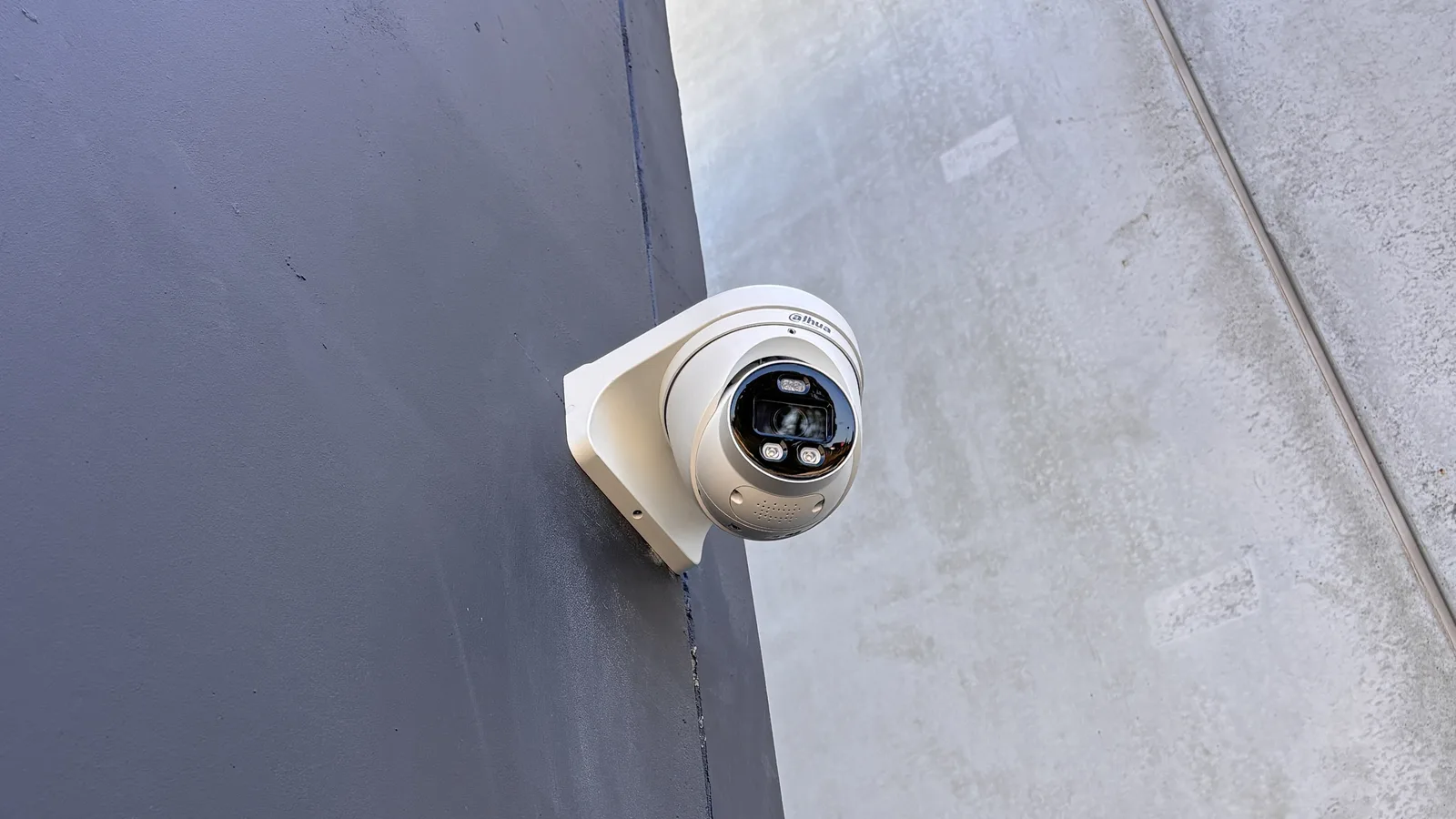
Up under the gutter feels right because it is out of reach. It records the tops of heads. A camera needs to be near enough to face height to catch a face, angled across the way someone walks in rather than straight down at them. Too low and it gets knocked off the wall, too high and it is decoration. There is a window, and most DIY installs are above it.
It covers the front and nothing else
The front door is where the camera goes because that is where the power point is. The side gate, the rear, and the shed are where people actually come in. Coverage beats specification every time: four cheap cameras covering the real approaches beat two good ones covering the driveway twice.
Night
You do not find out what a camera was worth until the one night you need it, and by then the recording either exists or it does not. A small sensor behind a slow lens leaves a grey smear where a face should be. I have written up why in is an 8MP camera better than a 4MP one, and which brands I fit in which cameras I install and why.
Everything depends on the internet
A cloud camera with no local recording stops recording when the modem drops out, and that is the moment it was bought for. Cloud plans also keep a few days, so the break-in you discover after a week away is already gone. A recorder with a drive in the house keeps recording through an outage and costs nothing a month. What happens in a blackout is covered in do security cameras work without power or internet.
The notifications get muted
A camera that alerts on every moth and passing headlight gets muted inside a fortnight, and a muted system is not a system. How fussy a camera is about what deserves your attention is decided by the hardware you buy, not by a slider you turn down afterwards.
The line you cannot cross yourself
Installing cameras on your own house is your business and perfectly legal. Mains electrical work is not. Anything wired into a mains circuit or the switchboard, including hardwired sensor lights, is licensed electrical work, whatever the box says. That is covered in security sensor lights in Perth.
Running a cable through a ceiling to a plug pack is not the dangerous part. Deciding the lighting circuit can take one more thing is.
What a box does not come with
This is the real difference, and it is not a feature you can compare on a shelf.
When a DIY camera stops uploading, or the recorder fills up, or the app stops seeing it after a new modem, you are the support department. You will spend a Saturday on it. With an installed system you make a phone call to the person who put it in, who knows what is on your wall and what it is plugged into.
That is also why I do not install security equipment a client has bought themselves. I cannot warrant hardware I did not supply, and when it fails you would be chasing a retailer instead of calling me. General electrical fittings are different and I will happily fit those for labour. [C]
So, is it worth it?
- Renting, or watching one thing: buy the kit, and buy a good one.
- You own the place and want evidence rather than reassurance: wired, recorded locally, planned around the property.
- You hold a Seniors Card, or you run a small business: do the rebate maths before you buy anything, because self-installing is the expensive option.
- You already bought a DIY kit: do not bin it. If the cameras are IP cameras that support ONVIF, a proper recorder can often take them and add the detection they never had.
If you are weighing it up, the published prices are there so you can compare like for like, and the CCTV installation page covers how a job actually runs. Businesses are on the business alarm and CCTV page.
Common questions
Is a DIY security system worth it?
For a renter, a single doorbell, or eyes on a shed, yes. For a home you own and intend to keep secure, usually not. The kit is rarely the problem. Placement, night performance and having someone to call when it stops working are, and those are the parts a box does not come with.
Can I legally install my own CCTV in WA?
On your own home, yes. Cameras and alarms you fit yourself are your business. What you cannot do yourself is the mains electrical work: anything wired into the switchboard or a mains circuit, including hardwired sensor lights, is licensed electrical work. Doing it for someone else as a business is different again and needs a security licence.
Does DIY affect the WA security rebates?
Yes, and this is the part most people miss. For the state Seniors Safety and Security Rebate, CCTV, alarms and video doorbells have to be installed by a business holding both a Security Agent Licence and a Security Installer Licence, so a self-install does not qualify. [A] Some council schemes pay a lower percentage for self-installed items. The WA small business CCTV rebate goes further and requires hard-wired cameras fitted by a licensed installer, so a wireless DIY kit is out entirely. [B]
What about battery and Wi-Fi cameras?
They have a place, and that place is renting or anywhere you cannot drill. They depend on your Wi-Fi reaching the far corner of the block, the batteries need charging, most want a subscription to keep the footage, and a camera stuck to a wall can be taken off the wall.
I already have a DIY system. Is it wasted?
Often not. If the cameras are IP cameras on a network cable and they support ONVIF, a proper recorder can usually take them and add real detection. Send me the model number off the label or out of the app and I will tell you whether it is worth keeping.
Sources
- WA Seniors Card, Safety and Security Rebate guide. www.seniorscard.wa.gov.au
- Small Business Development Corporation WA, Small Business Resilience Program CCTV Rebate. www.smallbusiness.wa.gov.au
- Dextel terms and conditions: clause 29.8 (package prices). Terms
Need Help With This?
Dextel Electrical & Security Services serves Perth metro. Free quotes, no obligation.
Get a Free Quote →